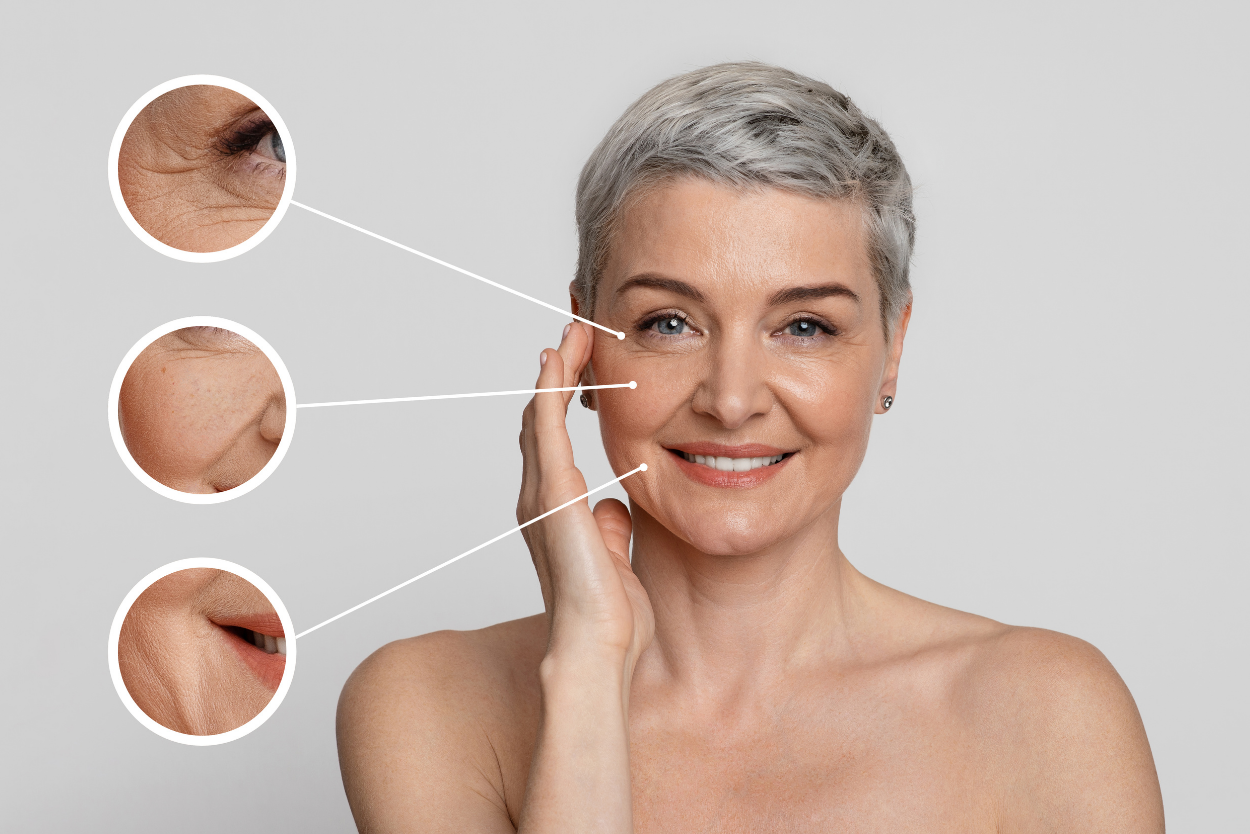
Every time you look in the mirror, you think you recognize yourself. Yet one day, when you look at your old photographs, you realize that the fullness your face once had has quietly disappeared. This is the most striking characteristic of silent aging: there is no sudden change; the process progresses so gradually that it becomes almost impossible to notice.
Facial volume loss is a process that begins much earlier than wrinkles and is often overlooked. Slight hollowing of the cheeks, thinning of the temples, or the lower face developing sharper contours can all be considered among the earliest signs of this silent transformation. But where exactly do these changes begin, and when? What are the underlying physiological causes?
What Is Silent Aging and Why Does It Go Unnoticed?
Silent aging can be defined as the gradual loss of volume, density, and structural support within the facial tissues over the years. Unlike wrinkle formation, which is visually obvious, this process follows a much subtler course. Because people see the same face every morning, the brain normalizes these small changes, making them difficult to recognize.
So why does silent aging go unnoticed so easily? There are several main reasons:
- Gradual progression: Changes occur over months or even years rather than from day to day, so there is no sudden turning point that attracts attention.
- The mirror illusion: Seeing the same face every day makes the brain less sensitive to subtle differences; changes often become apparent only when comparing old photographs.
- A wrinkle-focused perception: Socially, aging is most commonly associated with wrinkles. As a result, subtler changes such as volume loss are often overlooked for a long time.
- The multilayered structure of the face: The face consists of skin, fat, muscles, and bone. Since each layer changes at a different rate, the overall picture emerges gradually.
- The effects of lighting and makeup: Daily lighting conditions and makeup routines can temporarily mask the visual impact of volume loss, delaying awareness.
- Social familiarity: Because the people around us are going through a similar process, it becomes difficult to establish a comparative reference point, making these changes even less noticeable.
Where Does Facial Volume Loss Begin?
Facial volume loss does not begin in a single location; however, certain areas tend to be affected earlier than others. Contrary to popular belief, the first noticeable changes generally appear not in the cheeks or lips, but in less obvious areas such as the temples and around the eyes.
Temples: One of the earliest areas to lose volume, the temples gradually become slightly hollow. This hollowing can pull down the outer ends of the eyebrows, creating a tired and tense appearance. Thinning in the temple region also quietly transforms the overall framework of the face.
Under-eye area and eye contour: The delicate fat pads surrounding the eyes begin to thin early on. As a result, under-eye hollows become more prominent, making the eyes appear more tired.
Upper cheek area: As the fullness above the cheekbones diminishes, the midface becomes flatter, and the face as a whole takes on a longer, narrower appearance.
Forehead and glabellar region: Tissue thinning in this area directly affects eyebrow position and forehead contours, creating a foundation for expression lines to become more noticeable earlier.
The volume loss in all of these areas works together to reshape the overall facial structure and create the visual picture of silent aging. Therefore, these changes should be evaluated not as isolated events but as part of a comprehensive process.
The Physiological Causes Behind Volume Loss
Facial volume loss is not simply a surface-level change in the skin; it is the result of a complex physiological process involving the deeper tissue layers. Several mechanisms occur simultaneously throughout this process:
- Reduced collagen and elastin production: The synthesis of these proteins, which form the structural framework of the skin, slows with age. As a result, the skin gradually loses its elasticity and supportive structure.
- Loss and displacement of facial fat pads: The face consists of separate fat compartments. With age, these compartments not only lose volume but also descend downward, leading to hollowing and sagging.
- Loss of bone density: The bones of the facial skeleton also gradually recede over time. This reduction is particularly evident in the eye sockets, jaw, and cheekbones, leaving the overlying soft tissues with less structural support.
- Reduction in muscle mass: Like the muscles throughout the rest of the body, facial muscles also undergo age-related muscle loss. As they become thinner, their ability to support the tissues above them gradually declines.
- Declining hyaluronic acid levels: The reduction of the skin’s naturally occurring moisture-retaining molecules decreases its capacity to hold water, diminishing its plump appearance.
- Weakened microcirculation: Reduced tissue nourishment slows cellular renewal and accelerates volume loss. This mechanism also negatively reinforces all the other processes involved.
What Happens at Which Age and in Which Area? A Chronological Overview
Silent aging does not begin suddenly at a specific age. Instead, it affects different areas of the face during different decades of life. Understanding this chronological progression makes it easier to recognize changes at an earlier stage.
Twenties: During this period, collagen production gradually begins to decline. The changes are not yet visible, but a silent transformation has already begun beneath the skin. The delicate tissues around the eyes may show the earliest subtle signs.
Thirties: Mild thinning in the temples, the first signs of under-eye hollowing, and the gradual loss of fullness in the upper cheeks are among the typical characteristics of this decade. Although facial contours remain well-defined, the overall structure begins to change slightly. These changes become much more noticeable when compared with older photographs.
Forties: Volume loss in the midface becomes more pronounced. Fullness beneath the cheekbones decreases, the nasolabial folds deepen, and mild sagging may develop in the lower face. Bone resorption also accelerates during this period.
Fifties and beyond: Volume loss across all tissue layers combines to significantly alter the overall facial contour. The jawline loses definition, the temples appear more hollow, and the midface becomes noticeably flatter. At this stage, volume loss and the effects of gravity become closely intertwined.
Factors That Accelerate Volume Loss
Although genetic predisposition is one of the primary factors determining both the rate and pattern of volume loss, many lifestyle-related factors can significantly accelerate the process. Being aware of these factors helps in understanding the progression of silent aging.
Sun exposure: Ultraviolet radiation directly damages collagen and elastin fibers. Long-term, unprotected sun exposure can accelerate tissue loss well beyond what would be expected from genetics alone.
Smoking: The compounds found in tobacco impair skin microcirculation, increase oxidative stress, and negatively affect collagen synthesis. As a result, both skin quality and deeper tissue structures deteriorate.
Rapid and repeated weight fluctuations: Repeated expansion and contraction of the facial fat compartments place stress on the connective tissue and create conditions for permanent displacement of the fat pads.
Chronic stress and insufficient sleep: Persistently elevated levels of stress hormones such as cortisol disrupt tissue repair mechanisms and slow cellular renewal.
Poor nutrition: A diet lacking in protein, antioxidants, and essential fatty acids reduces the building blocks needed to support the regeneration of subcutaneous tissues.
Excessive alcohol consumption: Alcohol disrupts the body’s fluid balance and reduces the skin’s ability to retain moisture, making volume loss appear more noticeable. When all of these factors are considered together, the influence of lifestyle choices on silent aging becomes clear.
How Can You Recognize Volume Loss in Your Own Face?
- Compare old photographs: Place photographs from different periods side by side. Focus on changes in cheek fullness, temple width, and the under-eye area. This is one of the most effective ways to overcome the mirror illusion.
- Examine your face in natural light without makeup: Artificial lighting and makeup can conceal the visual effects of volume loss. Examining your face in natural daylight, without makeup, provides a more accurate picture.
- Pay attention to your side profile: Temple hollowing and cheek volume loss, which may be difficult to detect from the front, often become much more apparent from the side. Side-profile photographs can be particularly revealing.
- Assess the definition of your facial contours: Shadows becoming more pronounced beneath the cheekbones, softening of the jawline, or a loss of definition in the lower face are all typical visual indicators of volume loss.
- Notice changes in your facial expression: If you appear tired, sad, or tense even when your face is relaxed and neutral, this may be associated with volume loss in areas such as the temples and around the eyes. This is, in fact, one of the most commonly overlooked signs of silent aging.
- Seek evaluation from a specialist: Beyond your own observations, a dermatologist or aesthetic medicine specialist can evaluate your facial structure from a comprehensive perspective and identify early-stage changes.