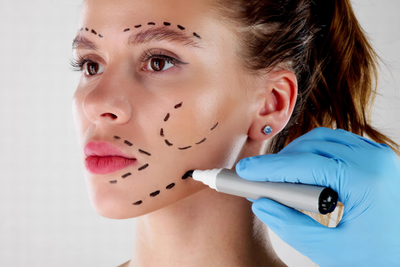
The face is not composed solely of the surface of the skin. Beneath it, fat tissue, muscle layers, and bone structure work together to create the three-dimensional form of the face. Over time, each of these layers undergoes changes at different rates; fat tissue diminishes, bone density decreases, and muscles weaken. As a result, the anatomical process known as facial volume loss begins. This process often becomes noticeable much earlier than wrinkles and quietly transforms the overall expression of the face, the way it reflects light, and the balance of the facial oval.
Many people look in the mirror and have the feeling that “something has changed, but I can’t quite figure out what.” This feeling is often an early sign of facial volume loss. Loss of definition in the cheekbones, deepening hollows under the eyes, more pronounced folds in the nasolabial area, or a gradually less defined jawline are all different manifestations of volume loss in different faces.
We examine the anatomical causes of facial volume loss, how it can be recognized at an early stage, and when dermal filler treatment may be considered from a scientific perspective. Our aim is to guide readers in understanding their own face better and in consulting a qualified aesthetic physician at the right time. Understanding facial anatomy is the first step toward recognizing these changes earlier and making informed decisions.
What Is Facial Volume Loss and Why Does It Occur?
Facial volume loss is an anatomical process that occurs as the fat, muscle, and bone tissues in the deeper structures of the face decrease over time. This process is shaped not only by aging but also by the combination of multiple factors.
- Natural aging process: The fat pads beneath the skin gradually shrink and shift over time; this reduces the fullness of the face.
- Reduced collagen and hyaluronic acid production: These structural components naturally produced by the skin decrease with age; tissue support and hydration capacity decline.
- Reduced bone density: The bones of the facial skeleton gradually lose volume; this changes the attachment points of the soft tissues above them.
- Muscle atrophy: Facial muscles become thinner due to use and aging; this weakens the structure that supports the three-dimensional form of the face.
- Sun damage and environmental factors: Prolonged UV exposure negatively affects subcutaneous tissue and may accelerate volume loss.
- Sudden or excessive weight changes: Rapid weight loss can disproportionately reduce facial fat tissue, leading to a sunken appearance.
- Genetic predisposition: Since facial structure and tissue quality are partly hereditary, the age at which volume loss begins and its severity vary from person to person.
What Are the Early Signs of Facial Volume Loss?
Volume loss usually develops gradually rather than suddenly. For this reason, early signs are often overlooked or attributed solely to fatigue or stress. However, when changes in the way the face reflects light, the areas where shadows fall, and the overall balance of the facial oval are carefully examined, the first signals of volume loss can be identified quite early.
The most practical way to recognize early signs is to assess the face under different lighting conditions and from different angles. Sunken areas that are not noticeable under direct light may create pronounced shadows under side lighting. These changes become particularly apparent in the morning, when the face is rested and any swelling has subsided.
Volume loss that begins in the upper and middle areas of the facial oval gradually progresses toward the lower face. During this process, the overall expression of the face changes; a fresh and rested appearance may be replaced by a more tired or tense expression. Since the area where facial volume loss begins varies from person to person, it is highly important for each individual to understand their own anatomy. The following sections examine in detail the anatomical areas where volume loss most commonly manifests itself and the early changes that occur in these areas.
Flattening and Hollowing of the Cheekbones
Cheekbones are fundamental anatomical structures that give the middle region of the face three-dimensional height and light reflection. When the fat pads in this area become thinner over time, the definition of the cheekbones decreases, and the face takes on a flatter, less vibrant appearance.
In the early stages, this change is more noticeable from the side profile of the face. A slight hollowing or shadowing begins beneath the cheek area; this makes the transition between the under-eye area and the midface appear sharper and more tired. Volume loss in this area, which largely determines the fullness and youthful appearance of the facial oval, is an important early sign that warrants evaluation by a qualified aesthetic physician.
Deepening of Nasolabial Folds (Smile Lines)
The nasolabial folds extending from the sides of the nose to the corners of the mouth are one of the most visible manifestations of volume loss in the middle region of the face. These lines are not merely wrinkles on the surface of the skin; they are also a result of the downward displacement of fat tissue in the upper face and the reduction of midface volume.
In the early stages, these folds may be noticeable only while smiling, but over time they begin to leave a permanent mark even at rest. This change may make the overall expression of the face appear more serious or tired. Deepening in the nasolabial area is directly related to the redistribution of midface volume; therefore, evaluation of this area should be carried out by taking the overall anatomy of the face into consideration.
More Pronounced Under-Eye Hollows
The under-eye area is one of the areas where facial volume loss manifests itself earliest and most noticeably. Hollowing in the transition area between the lower eyelid and the cheek indicates that the fat tissue in this area has become thinner and that the deeper structures have lost support.
This hollowing creates a dark shadow beneath the eyes and may make a person look more tired or older than they actually are. An appearance that does not disappear despite getting sufficient sleep is often a reflection of volume loss. Since the under-eye area is anatomically sensitive, evaluation and any potential treatments in this area should only be performed by an experienced aesthetic physician.
Sagging and Loss of Definition Along the Jawline
The jawline, which defines the lower boundary of the facial oval, begins to lose its sharpness with volume loss. A reduction in fat tissue in the lower face and a decline in subcutaneous support make the transition between the jaw and neck appear less defined. This negatively affects the overall balance and symmetry of the facial oval.
In the early stages, this change in the jawline is particularly noticeable when viewed from the side profile. This loss of definition in the lower third of the face directly affects the person’s overall expression and the perceived youthfulness of the facial oval. Redefining the jawline should be considered as part of a comprehensive facial assessment and evaluated within the framework of personalized planning.
Hollowing of the Temple Area
The temple area is one of the areas where volume loss is often overlooked but which has a significant impact on the overall appearance of the face. Loss of fat and soft tissue in this area causes the temples to become hollow, giving the upper part of the face a narrower and more skeletal appearance.
Temple hollowing may also contribute to downward displacement of the outer ends of the eyebrows, which can affect the overall expression around the eyes. When this volume loss in the upper part of the face is evaluated together with the cheekbone and midface areas, it provides a critical clue for understanding the overall balance of the facial oval. A qualified aesthetic physician evaluates the temple area together with the other areas of the face through a holistic approach.
Is Facial Hollowing Possible at a Young Age?
Volume loss is not exclusively a problem associated with advanced age. Noticeable hollowing and distortion of the facial oval can also be observed in people in their twenties and thirties. There may be multiple explanations for this.
Genetic structure largely determines when and how facial volume changes. In individuals who naturally have thin fat tissue, facial contours may develop a sharper and more hollow appearance at an earlier stage, independently of the aging process. In addition, sudden and excessive weight loss can rapidly reduce facial fat tissue, particularly at a young age, resulting in unexpected facial hollowing.
Lifestyle factors such as chronic stress, irregular sleep, and inadequate nutrition can also negatively affect tissue quality and skin hydration, intensifying the appearance of volume loss. Smoking stands out as an important factor that accelerates collagen breakdown and weakens tissue support. Recognizing these changes early in young individuals experiencing facial volume loss creates the basis for more effective long-term planning.
For individuals experiencing facial hollowing at a young age, the appropriate evaluation process is based on the same principles: personalized planning, comprehensive examination of the facial anatomy as a whole, and a thorough consultation with a qualified aesthetic physician.
What Causes One-Sided Cheek Hollowing? How Should Asymmetry Be Evaluated?
Facial asymmetry naturally exists to some degree in all individuals. However, one-sided cheek hollowing may indicate a volume imbalance beyond this natural asymmetry. Evaluating asymmetrical volume loss requires a systematic approach.
Evaluating the effect of sleeping position: Sleeping on the same side for many years exposes the facial tissue on that side to mechanical pressure and may contribute to an asymmetrical appearance over time. Therefore, sleeping habits are the first step in the evaluation.
Examining the chewing muscles: A one-sided chewing habit affects the muscle structure on that side differently and may disrupt facial symmetry. It is important for the physician to ask about this habit.
Evaluating the bone structure: Natural differences in the underlying bone structure affect the distribution of surface tissues. This can be identified more clearly through imaging methods.
Reviewing any history of trauma or surgery: Previous trauma or surgical intervention involving the face may permanently affect tissue distribution.
Comprehensive facial mapping: A qualified aesthetic physician evaluates both sides comparatively and determines an approach aimed at achieving balance within the framework of personalized planning.
What Signs Indicate That It May Be Time for Dermal Filler Treatment?
Dermal filler treatment is not a method that should automatically be used for every sign of volume loss. However, certain anatomical changes may indicate that it is appropriate to evaluate this option with a qualified aesthetic physician.
The following conditions may be considered among the early signs to pay attention to when assessing the timing of dermal filler treatment:
- Nasolabial folds that are noticeable even at rest and are becoming progressively deeper,
- A flattened appearance in the cheek area where light is no longer reflected sufficiently,
- Under-eye hollows creating a persistent shadow despite getting sufficient sleep,
- Loss of definition along the lower boundary of the facial oval and reduced clarity of the jawline,
- Noticeable hollowing in the temple area and a narrowing appearance in the upper part of the face,
- Situations in which the overall expression of the face appears tired or tense when looking in the mirror, but this cannot be attributed to mood or sleep patterns.
The presence of these signs does not mean that a person necessarily needs dermal fillers. However, recognizing these changes provides an appropriate starting point for a comprehensive evaluation with a qualified aesthetic physician. Personalized planning is just as important as choosing the right timing.
What Treatment Methods Are Used for Facial Volume Loss?
Treatment options for facial volume loss vary depending on the person’s anatomical structure, the severity of the loss, and their expectations. A qualified aesthetic physician evaluates these options through a holistic approach.
- Hyaluronic acid-based dermal fillers: Volume is restored by injecting filler materials with appropriate viscosity and tissue compatibility into different areas of the face. This method, preferred for its biocompatibility and safety profile, provides results that support natural anatomy.
- Fat injection (liposculpture): Fat tissue taken from the person’s own body is processed and then transferred to areas of the face experiencing volume loss. It may be considered a long-term option.
- Biostimulator treatments: Biostimulatory substances that support collagen production may help alleviate the effects of volume loss by improving tissue quality.
- Thread lift treatments: This method, used to increase tissue support and achieve a lifting effect, may be considered particularly for changes in the midface and lower face.
- Combined treatment planning: In many cases, the most effective approach is to combine multiple methods within the framework of personalized planning. A holistic approach is the basis for achieving natural and balanced results.
What Can Be Done to Slow Facial Volume Loss?
Since volume loss is a biological process, it cannot be completely prevented; however, various steps can be taken to slow this process and preserve tissue quality.
Using sunscreen slows collagen breakdown by limiting UV-induced tissue damage. Incorporating a broad-spectrum sunscreen into the daily routine is a fundamental step in maintaining skin quality.
Adequate hydration supports both the skin’s hyaluronic acid balance and overall tissue turgor. Maintaining adequate daily water intake positively affects the skin’s sense of fullness.
A balanced, protein-rich diet provides the building blocks necessary for collagen synthesis. Foods rich in antioxidants support tissue against free radical damage.
Avoiding smoking eliminates one of the most important environmental factors that accelerate collagen breakdown. Regular sleep and stress management are also among the lifestyle factors that support tissue regeneration.
All of these measures do not completely stop volume loss; however, they may contribute to the process progressing more slowly and in a more balanced manner. Consulting a qualified aesthetic physician for a personalized approach is fundamental to determining the most appropriate course of action.