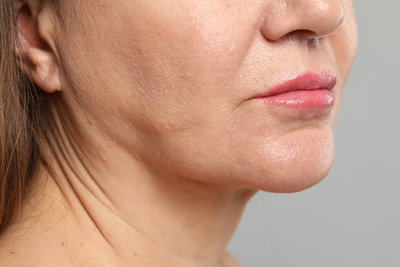
Filler fatigue refers to a condition in which repeated hyaluronic acid filler treatments lead to a buildup of filler material in the face, causing puffiness and resulting in an unnatural appearance known as “pillow face.” Over time, the filler may no longer produce the expected result, yet if treatments continue, a persistent sense of fullness can develop in the face.
Excessive filler treatments performed at frequent intervals can cause hyaluronic acid to accumulate beneath the skin before it has been fully broken down. This buildup can disrupt the natural contours of the face and make the facial expression appear tight and swollen. The loss of skin elasticity that occurs with age can also contribute to this process.
Recognizing the signs early, choosing the appropriate treatment approach, and taking preventive measures can help make filler fatigue a reversible condition. Taking a closer look at its causes makes the mechanism behind its development clearer.
What Is Filler Fatigue and Why Does It Occur?
Filler fatigue is an unwanted outcome that can occur when repeated hyaluronic acid filler treatments accumulate beneath the skin over time. This buildup is not the result of a single treatment session; rather, repeated filler treatments over months or years can exceed the amount of filler the tissues can accommodate naturally. As a result, the face can develop an excessive fullness that moves away from its natural appearance.
The loss of the skin’s natural elasticity plays a central role in this process. Young, elastic skin can metabolize hyaluronic acid more efficiently, whereas skin that has lost elasticity may not break down the filler as completely. Material that is not fully broken down can remain in the tissue and contribute to what is described as filler accumulation.
Treatments performed at short intervals and in high doses directly increase this risk. When a new session is scheduled before the previous filler has fully broken down, a layered buildup of material can develop beneath the skin. As the frequency of treatments increases, the accumulation may also take longer to become noticeable.
Excessive treatment while attempting to compensate for facial volume loss is a key trigger of filler fatigue. Efforts to compensate for volume loss in areas such as the cheeks, jawline, and under-eye area with age can lead to slightly more filler being added at each session. This cycle can ultimately produce the opposite of the intended natural appearance.
Recognizing the signs that this process leaves on the face makes it easier to understand when the problem may be becoming more significant.
What Are the Signs of Filler Fatigue? Have You Noticed These Signs on Your Face?
The most noticeable sign is unnatural facial puffiness and a “pillow face” appearance. This term describes a facial surface that becomes flat, tight, and swollen as filler accumulates in layers beneath the skin as a result of repeated injections. Noticing that the facial contours no longer follow their natural lines when looking in the mirror may be one of the first signs.
A feeling of excessive fullness in the cheeks, around the lips, and under the eyes becomes particularly noticeable. The natural contour of the cheekbones may disappear and be replaced by a rounded, swollen volume, while tightness that does not correspond naturally with facial expressions may develop around the lips.
A facial expression that appears tight and swollen and does not move naturally with facial expressions is another typical sign. If the face does not move as expected when smiling or speaking, this may indicate that the tissue has lost some of its flexibility due to excessive filler. A gradual decline in skin quality may also accompany this condition.
Hardness beneath the skin, irregular contours, and asymmetry are also signs that should be taken seriously. A noticeably firmer area compared with another region or an imbalance between the two sides of the face may indicate accumulated filler-related effects. These signs provide a clearer picture when evaluated together rather than individually.
Why Is Filler Fatigue Becoming So Common?
The main reasons filler fatigue has become a more widely discussed issue are the increased accessibility of facial filler treatments and the way social media has accelerated aesthetic expectations. The constant exposure to faces treated with fillers on visual-sharing platforms can cause filler treatments to be perceived as a routine part of personal care.
The fact that some practitioners may not be sufficiently cautious about dosage and treatment frequency is another factor that can contribute to the problem. Repeated filler treatments performed without reassessing the existing condition of the skin and previously injected filler during each session can gradually result in an accumulation that may not be immediately recognized.
The misconception among some patients that “more filler means a better appearance” can also create unrealistic expectations. However, beyond a certain point, increasing volume does not enhance naturalness but instead contributes to an overfilled appearance, causing facial features to lose their individual proportions.
Uncontrolled and irregular follow-up intervals can make the situation even more complicated. Starting a new treatment session without knowing how much of the previous filler is still present can allow accumulation to increase without being noticed.
Understanding the reasons behind this growing phenomenon makes it easier to identify who may be at greater risk.
Who Is More Likely to Experience Filler Fatigue?
The risk of filler fatigue increases significantly among people who receive hyaluronic acid filler regularly and at short intervals. Performing a new treatment without allowing the previous filler to fully break down can gradually lead to filler accumulation beneath the skin. Over time, this buildup can cause the volume to appear accumulated rather than evenly distributed.
People who prefer high doses and those who attempt to intervene in the natural aging process at an early age are also among those who may face a higher risk. Applying substantial amounts of filler before significant facial volume loss has occurred may result in more material being introduced than the skin requires. This can make the accumulation more noticeable in the following years.
Filler accumulation can be more apparent in individuals with reduced skin quality and elasticity. Skin that has lost its elasticity may not distribute the injected volume as evenly as it once did. As a result, the same amount of filler that may not be particularly noticeable in younger, more elastic skin can appear as pronounced puffiness in thinner or less elastic skin.
The experience of the practitioner and the frequency of follow-up are other factors that can directly affect an individual’s level of risk. An approach that does not adjust the dosage according to the person’s skin structure and does not recommend regular follow-up can make it more difficult to identify filler accumulation at an early stage. Choosing an experienced physician is an important part of maintaining a natural-looking filler result.
For people who recognize that they may be in a higher-risk group, the key question is what should be done if filler fatigue develops.
What Should Be Done If Filler Fatigue Has Developed? What Are the Treatment Options?
When filler fatigue develops, one of the most common treatment options is dissolving the filler with the enzyme hyaluronidase. Hyaluronidase is an enzyme that breaks down hyaluronic acid and can dissolve accumulated filler material beneath the skin, helping the facial contours return toward a more natural appearance. Depending on the treated area and the amount of accumulated filler, filler dissolution may be performed in a single session or over several sessions.
A specialist assessment is required before treatment begins. The physician evaluates the distribution of filler in the face, the quality of the skin, and the areas where swelling or fullness is most pronounced, and determines the appropriate hyaluronidase dose for the individual. This gradual approach allows the filler to be reduced progressively rather than all at once, helping prevent unwanted effects such as sudden hollowness or asymmetry.
In some cases, dissolving the filler alone may not be sufficient. If the skin has lost a significant degree of elasticity, non-surgical skin-tightening methods or surgical options such as a facelift may be considered as supportive treatments. In fact, an increasing number of people have recently been choosing facelifts instead of relying on the temporary effects of fillers; when properly performed, a facelift can preserve natural movement while also defining the facial contours.
Throughout the treatment process, it is important to follow a plan that allows the skin and tissues time to recover. Rather than undergoing consecutive interventions, allowing sufficient time between filler dissolution and a new treatment gives the tissues an opportunity to recover. A process carried out under specialist supervision demonstrates that filler fatigue is not necessarily a permanent problem but can be a reversible condition. Another issue that is just as important as treatment is the preventive measures that can help avoid developing this condition in the first place.
What Should Be Considered to Prevent Filler Fatigue?
One of the most effective ways to prevent filler fatigue is to work with an experienced and qualified physician when determining the frequency and dosage of filler treatments. In facial filler procedures, decisions regarding dosage and timing should be based on the assessment of a specialist who is familiar with the individual’s skin structure and previous treatments. Repeated filler sessions performed by inexperienced practitioners may increase the risk of filler-related complications.
The amount of existing filler should be assessed before every filler session. If residual hyaluronic acid from previous treatments beneath the skin is overlooked, a new injection can increase the existing accumulation and create unnatural fullness. For this reason, each session should be planned based on an assessment of the current condition rather than treating the face as though it has never been treated before.
A minimal and balanced approach that preserves the face’s natural proportions should be preferred. Applying a limited amount of filler only where needed, without disrupting facial symmetry, supports a natural-looking result. The aim should not be to fill the face, but to restore missing volume in a balanced manner.
Regular follow-up appointments can help identify accumulation before it becomes clearly noticeable. During follow-up visits, the physician can assess the amount of filler remaining beneath the skin and determine whether another treatment is actually necessary. Once preventive measures have been taken, maintaining a natural appearance after filler treatment also requires careful attention.
How Can a Natural Appearance Be Maintained After Filler Treatment?
A natural appearance after filler treatment can be maintained when the procedure is performed appropriately for the individual’s facial anatomy, using an appropriate and conservative amount of filler in the right areas. Every face has a different bone structure, distribution of fatty tissue, and skin thickness. Therefore, hyaluronic acid filler planned according to the individual’s own facial features rather than using a standardized dose can support a natural-looking result. Excessive filler can create a new imbalance instead of simply addressing facial volume loss.
Skincare and regular follow-up can help maintain the results of filler for longer. Hydration, sun protection, and skincare routines that support skin quality can contribute to maintaining a more stable filler result beneath the skin. Follow-up appointments can also clarify how long the filler is maintaining its effect and whether another treatment is actually needed.
Amounts that do not interfere with the natural movement of facial expressions should be preferred rather than excessive treatment. The ability of the face to move naturally when smiling, speaking, or expressing surprise is one of the clearest indicators of a natural-looking filler result. A rigid or immobile expression may indicate that the amount of filler exceeds what is necessary.
It is recommended to create an individualized maintenance plan in consultation with a specialist. This planning also helps distinguish between maintaining a natural appearance, filler fatigue, and the natural aging process.
What Is the Difference Between Filler Fatigue and Natural Facial Aging?
In natural aging, skin laxity and facial volume loss progress gradually over the years and generally affect the face as a whole, whereas filler fatigue is characterized by puffiness and unnatural fullness. During the aging process, facial contours gradually become softer and less defined. With filler fatigue, the change may instead manifest as a more sudden and noticeable artificial appearance.
Filler fatigue generally creates a condition that is concentrated in specific areas rather than evenly affecting the entire face. The cheeks, area around the lips, and under-eye area are among the regions where this accumulation is most commonly observed. Swelling in these areas can appear disproportionate to the surrounding tissues, giving the face an artificial expression and contributing to the appearance known as “pillow face.”
The two processes also differ in terms