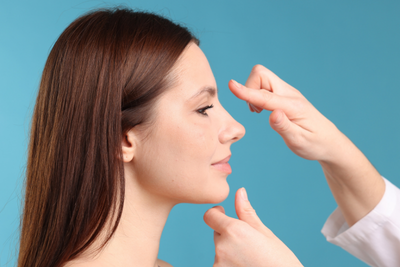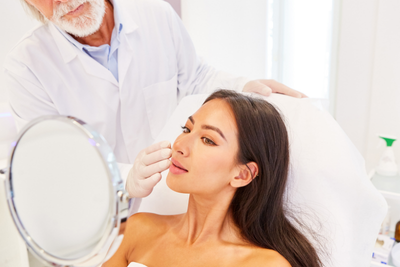
Facial balancing is an aesthetic approach that evaluates the face as a whole rather than focusing on a single area and uses hyaluronic acid dermal filler to balance facial proportions. The aim of this approach is not to enlarge the lips or cheekbones on their own, but to create facial harmony by establishing balance between areas such as the jawline, cheekbones, nose, and forehead.
During the planning process, the facial golden ratio is used as a reference point, but the treatment is always customized to the individual; the same template is not applied to everyone. The goal is a natural filler appearance, preserving the face’s own structure and symmetry while supporting only the areas that disrupt overall balance. Although it is often confused with full-face filler, facial balancing represents a selective, strategic philosophy based on proportions rather than adding volume to every area of the face. Understanding the foundation of this philosophy makes it clearer why the approach differs from other filler treatments.
What Is Facial Balancing and What Is Its Core Philosophy Based On?
Facial balancing is a filler philosophy that aims not to correct a single imperfection, but to achieve an overall balance in the proportional relationship between different facial features. In this approach, areas such as the chin, cheeks, or nose are not evaluated independently but as complementary parts of the face. The concept of balancing facial proportions is based on the idea that a change in one area can also affect how other areas are perceived.
The basic principle is this: a treatment performed on the jawline does not affect only the jawline; it can also alter the appearance of the neck contour and cheeks. For this reason, the face is planned as a three-dimensional whole rather than as a collection of individual areas, and an intervention in one area is always evaluated together with the surrounding regions.
The facial golden ratio is used as a reference point during planning, but this ratio is never applied as an exact template. A person’s own bone structure, skin quality, and symmetry take precedence over a mathematical ratio.
Hyaluronic acid filler stands out as the primary material used in this philosophy because its reversibility within the tissue allows an unwanted result to be reversed when necessary and provides a natural tissue feel. The goal of facial harmony can be achieved realistically through this flexible and controllable material.
Why Has Facial Balancing Become So Popular?
The rise of facial balancing is directly linked to the growing demand for a natural and proportionate appearance in aesthetic treatments. As social media has increased awareness of aesthetic procedures, people have increasingly begun to seek proportionate results across the face rather than enlarging a single area; an increased demand for natural-looking results has also been observed in aesthetic practice.
The reaction against the overly filled and unnatural results frequently seen in the past has played an important role in this change. Instead of isolated interventions such as excessively augmented lips or cheekbones, there has been a shift toward a more comprehensive approach that takes the balance between facial features into account.
The ability to apply small amounts of filler to multiple areas, such as the chin, cheeks, and temples, during a single session has also made facial balancing a practical option; this allows an overall improvement to be planned within a single appointment. The influence of celebrities and influencer culture in popularizing the natural filler look has also been another factor strengthening the search for facial harmony.
This growing interest raises the question of who can actually benefit from this approach.
Who Is Facial Balancing Suitable For?
Facial balancing is a facial filler approach suitable for people who perceive an imbalance in their facial features and want to improve their overall appearance rather than enlarge a single area. People who are concerned about facial asymmetry, volume loss, or disproportion may be considered potential candidates for this treatment.
Individuals with a weak-looking jawline, sunken cheeks, or an unbalanced facial profile may benefit significantly from this approach. Such profile imbalances are addressed by evaluating the face as a whole rather than focusing on a single area.
Just as people experiencing volume loss with age may benefit from facial balancing, younger individuals with congenital facial asymmetry may also benefit from balancing their facial proportions. In other words, facial balancing is not solely an anti-aging treatment but a flexible strategy that can be applied to different age groups.
On the other hand, this approach may not be suitable for individuals with a serious skin condition, an active infection, or unrealistic expectations. The physician’s preliminary assessment plays a decisive role in ensuring both safety and a natural-looking result.
Once the suitability criteria have been clarified, the next step is to examine which areas of the face are included in this assessment.
Which Areas Are Addressed During Facial Balancing?
Facial balancing involves a multi-area treatment plan in which the jawline, cheeks, cheekbones, tip of the nose, forehead, and temples are evaluated together. The physician considers these areas not individually but in relation to one another and may intervene in multiple areas during a single session. The aim is not to apply an equal amount of filler to every area, but to support the areas that disrupt overall balance.
Jawline and Chin Area
Jawline filler, also referred to as jawline augmentation, is central to facial balancing planning and is used to define the profile and strengthen the lower third of the face. Treatment in this area creates harmony between the chin, lips, and chin tip, helping to define the lower face. In people with a round facial structure, jawline filler may make the face appear more elongated and create a more angular appearance.
Cheeks and Cheekbone Area
Cheek filler and cheekbone filler increase midface volume, creating a younger and more dynamic appearance. The reduction in cheek volume that occurs with age can be supported with filler in this area, bringing greater definition to the central facial area. In people with a narrow facial structure, this area may be a priority for adding width and support.
Tip of the Nose and Forehead Area
Nose-tip filler and forehead filler can improve the transition between the upper and middle areas of the face. Minor irregularities at the tip of the nose can be softened with filler, while volume loss in the forehead can also be addressed in a way that supports the profile.
Temple Area
Temple filler adds volume to the temple area, which may become hollow with age, helping complete the balance of the upper face. Restoring lost volume in the temples can create a smoother transition between the tail of the eyebrow and the upper cheek area. Once these areas have been clarified, the next step is to understand the process through which the overall treatment plan is implemented.
How Is Facial Balancing Planned? What Does the Process Involve?
The facial balancing process is a step-by-step treatment plan that begins with a detailed facial assessment and continues through follow-up appointments. Each stage is connected to the next and serves the goal of balancing facial proportions, focusing not on a single area but on the face as a whole.
Assessment and Analysis
The process begins with facial photography and a detailed facial analysis. At this stage, an individual proportional map is created, and the relationship between areas such as the chin, cheeks, cheekbones, nose, and forehead is evaluated. Based on this analysis, the physician determines which areas should be addressed as priorities and creates a step-by-step filler plan. Not all areas are necessarily treated during the same session; in some cases, a strategy spread across several sessions is followed according to the priority of each area.
Treatment Stage
During the treatment stage, hyaluronic acid filler is injected in small amounts and in layers. This approach can contribute to a balanced rather than exaggerated appearance by creating natural transitions between different areas. The relationship of each treated area with the other facial regions is continuously taken into consideration during the injections.
Follow-Up and Fine-Tuning
Follow-up appointments after the procedure are performed to evaluate whether the result achieved corresponds with the planned treatment goal. If considered necessary, fine adjustments can be made during these appointments to complete the process of balancing facial proportions. Once these steps are clarified, it is important to examine how facial balancing differs from another commonly used approach.
What Is the Difference Between Facial Balancing and Full-Face Filler?
The fundamental difference between facial balancing and full-face filler lies in the scope and philosophy of the approach. Full-face filler is a more standardized treatment approach that aims to add volume to different areas of the face using a similar overall rationale. Facial balancing, on the other hand, is selective; it identifies only the areas that disrupt facial proportions and follows a proportion-based strategy.
With full-face filler, the primary aim is generally to increase overall volume, with each area assessed individually. In facial balancing, however, every area is evaluated in relation to the other areas. For example, because an intervention on the chin can also affect the appearance of the cheeks and temples, this relationship is placed at the center of the treatment plan.
As a natural consequence of this difference, some areas may not be treated at all during facial balancing. If most of the face is already balanced, only a single area that disrupts the overall proportions, such as a weak jawline or hollow temples, may be treated. With full-face filler, more areas are generally treated during the same session.
Both approaches may use hyaluronic acid filler; they do not differ in terms of the material itself. The difference lies in the philosophy: facial balancing offers a more personalized and minimalist perspective that limits the use of facial filler to the goal of achieving facial harmony. Once this distinction is clear, it becomes important to consider what should be taken into account during treatment.
What Should Be Considered During Facial Balancing?
The most critical point in facial balancing is choosing an experienced physician who has a thorough understanding of facial anatomy. An incorrectly planned facial filler treatment may increase rather than reduce the imbalance it is intended to correct. The physician’s ability to evaluate muscle movements, bone structure, and soft-tissue distribution together is a prerequisite for a safe treatment process.
Setting realistic expectations is another important factor. The goal is not to completely change the face, but to address the imbalance between existing facial features. When a natural filler appearance is not prioritized, the risk of overfilling increases, and the facial expression may appear unnatural over time.
A detailed facial analysis and photography should be performed before treatment begins. This stage identifies which areas are genuinely priorities and helps determine the appropriate amount of filler for each area. If the analysis is skipped, planning may become intuitive rather than objective, making the outcome less predictable.
Post-treatment care should also not be overlooked when considering the longevity of the result. Sun protection, attending recommended follow-up appointments regularly, and following the physician’s aftercare instructions can contribute to maintaining the filler for the expected duration. Once all these points have been clarified, it is possible to evaluate when the results become noticeable and how long they last.
How Long Does It Take to See the Results of Facial Balancing?
The results of facial balancing gradually become apparent as post-treatment swelling and redness begin to subside; the appearance immediately after the procedure is not the final settled appearance of the filler. Because hyaluronic acid filler has the ability to retain water within the tissue, the treated areas may appear fuller than they actually are during the first few days.
It takes some time for the filler to integrate with the surrounding tissue and achieve a natural appearance. This period varies depending on the treated area; the settling process may take slightly longer in mobile areas with a high concentration of muscle activity, such as the jawline, compared with relatively stable areas such as the temples or cheekbones.
The longevity of the results also cannot be expressed as one fixed figure; the type of hyaluronic acid filler used, the area treated, and the individual’s metabolism directly affect how long the results last. In treatments aimed at balancing facial proportions, differences in how quickly filler breaks down in different areas are also considered as part of the treatment plan.
Regular follow-up appointments after facial balancing are the most reliable way to monitor how long the filler remains effective and to make fine adjustments when necessary.
How Long Does It Take for the Effects of Facial Balancing to Become Noticeable and How Long Do They Last?
The effects of facial balancing begin to appear during the first few days after treatment; as swelling and redness subside, the actual appearance of the hyaluronic acid filler becomes more apparent. Because the increase in volume seen during the first few days may be partly attributable to tissue swelling, making an early assessment of the final result can be misleading.
The process of the filler fully integrating with the tissue and reaching its final shape generally takes between two and four weeks. This period may vary from person to person depending on the mobility of the treated area, tissue thickness, and the individual’s healing rate.
How long the results remain visible varies depending on the density of the product used and the area where it is injected; most hyaluronic acid fillers maintain their effects for between six months and one and a half years. In a treatment plan designed to balance facial proportions, differences in the duration of results between areas are also taken into consideration.
Regular follow-up appointments make it possible to monitor how well the filler’s effects are being maintained and, when necessary, restore balance through small adjustments. Facial balancing therefore becomes less of a one-time procedure and more of an ongoing maintenance process that is monitored over time.